

Blog
Asian Manufacturing Trends: Key Changes Shaping Trade in 2022

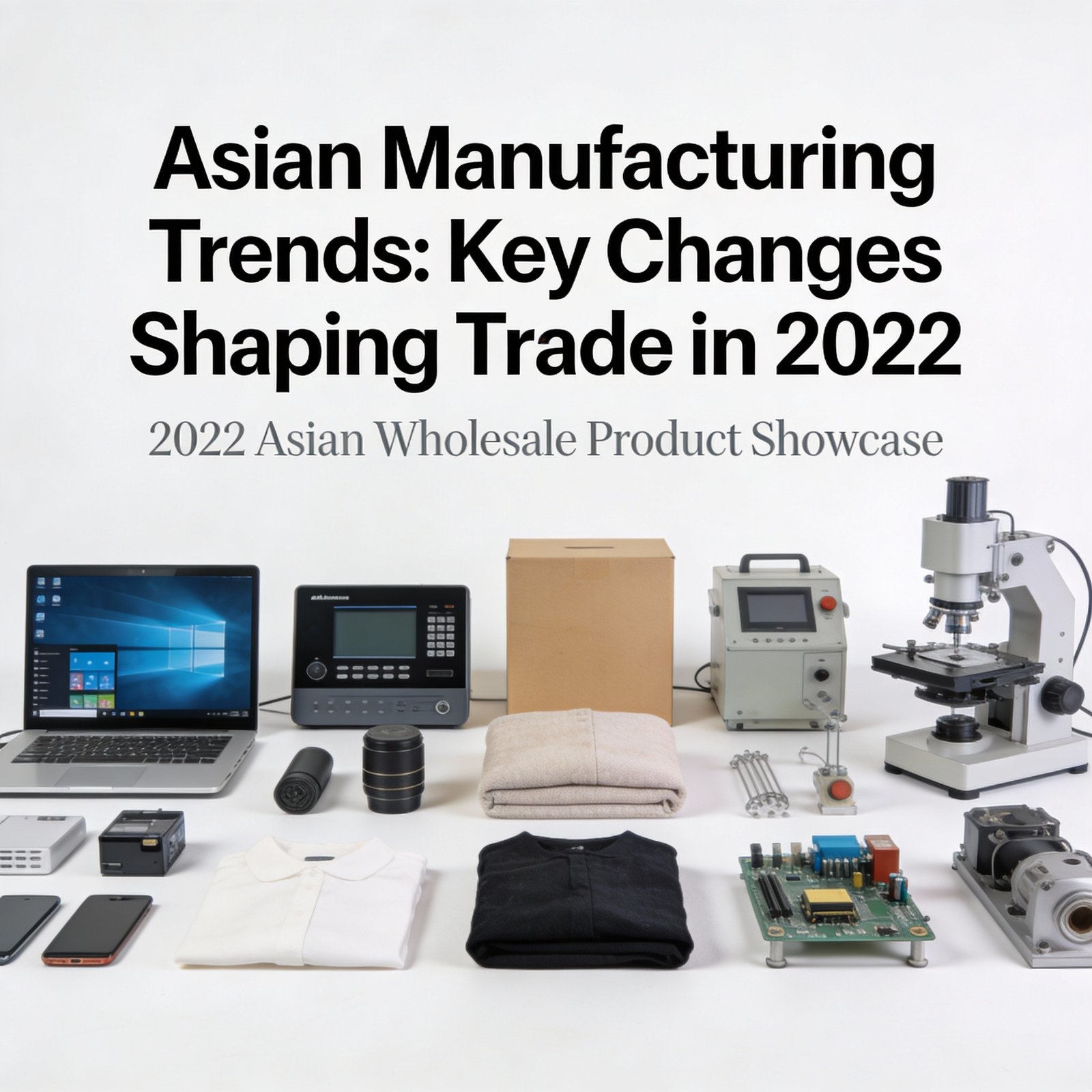
Asian Manufacturing and Trade: Key Developments Reshaping Global Commerce in 2022
The Asian manufacturing and trade landscape is experiencing significant transformations in 2022, marked by technological advances, shifting production patterns, and evolving economic conditions. This comprehensive analysis examines the major developments across key sectors and their implications for global trade.
Advanced Manufacturing and Technology Innovation
Samsung Electronics leads the technological revolution with its groundbreaking 3-nanometer chip production, delivering impressive improvements in both performance and energy efficiency. The new chips offer:
- 50% reduction in power consumption
- 30% enhancement in performance metrics
- Significant advancement in semiconductor manufacturing capabilities
Meanwhile, Foxconn’s $300 million investment in Vietnam represents a broader trend of manufacturing diversification beyond China, reflecting a strategic shift in Asian production networks.
Trade Performance and Economic Indicators
Asian economies are showing mixed performance in trade volumes and economic growth:
- China: 18% year-on-year export growth in May 2022
- India: Record-breaking exports of $38.94 billion in June 2022
- Japan: 1% economic contraction in Q1 2022
- South Korea: Monetary tightening with interest rates reaching 1.75%
Strategic Business Partnerships and Investment
Notable corporate collaborations are reshaping the business landscape. The Hyundai-Sony partnership signals a significant push into the electric vehicle market, while SK Hynix’s bid for Arm demonstrates Asian companies’ growing global ambitions in the semiconductor industry.
Supply Chain Evolution and Digital Transformation
The region faces both challenges and innovations in supply chain management:
- Disruptions from China’s zero-COVID policy affecting global supply chains
- LG Electronics’ LogiSense platform representing next-generation supply chain solutions
- Increased focus on supply chain resilience and diversification
Market Trends and Future Outlook
Key growth areas include:
- E-commerce expansion, exemplified by Alibaba’s continued growth
- Electric vehicle market development in Southeast Asia
- Digital transformation across traditional industries
The Asian manufacturing and trade sector continues to demonstrate resilience and innovation despite global challenges. The region’s ability to adapt through technological advancement and strategic partnerships positions it for sustained growth in the global economy.