

Blog
Asian Manufacturing Boom: New Investments Reshape Trade Landscape

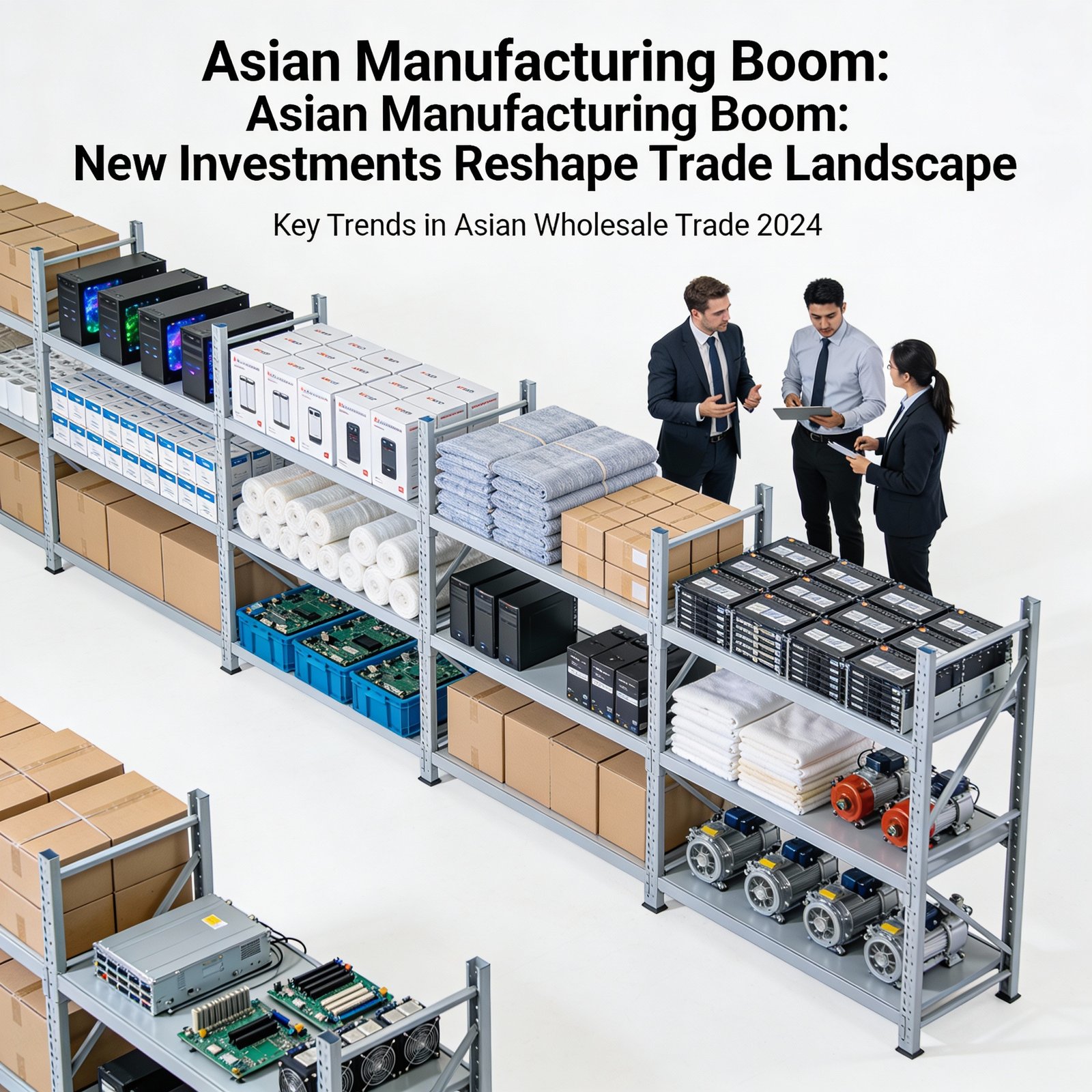
Asian Manufacturing and Trade: Key Developments Reshaping the Region’s Economic Landscape
Recent developments across Asia’s manufacturing and trade sectors signal significant shifts in regional economic dynamics, with new investments, technological innovations, and evolving trade partnerships shaping the future of global commerce. This comprehensive analysis examines the major trends and developments impacting Asian wholesale trade and manufacturing.
Manufacturing Expansion and Technology Investment
The manufacturing sector across Asia is witnessing substantial capital investments, particularly in high-tech industries. Samsung Electronics has announced a landmark $3.8 billion investment to expand its semiconductor facility in Pyeongtaek, South Korea, reinforcing the region’s dominance in chip production. Similarly, Foxconn’s $300 million expansion in Vietnam demonstrates the continuing trend of manufacturing diversification across Southeast Asia.
In the electric vehicle (EV) sector, Chinese manufacturers like BYD and Nio are rapidly scaling up production capabilities to meet surging global demand. This expansion is complemented by technological innovations, such as LG Energy Solution’s implementation of AI-driven “smart factory” systems, setting new standards for manufacturing efficiency.
Trade Dynamics and Economic Indicators
Recent trade statistics reveal a complex picture of regional economic health:
- China’s exports grew 7.1% year-over-year, though below expectations
- Japan recorded its 14th consecutive month of export growth, up 22%
- India’s economy expanded 13.5% in Q2, led by manufacturing and services
- Indonesia and South Korea strengthened ties through new trade agreements
Supply Chain Evolution and Regional Integration
The region is witnessing significant developments in supply chain infrastructure and integration. Vietnam’s investment in rail and port facilities demonstrates a strategic focus on logistics enhancement. Meanwhile, Taiwanese chipmakers are actively expanding their presence in Southeast Asia, particularly in Malaysia and Vietnam, contributing to a more distributed and resilient regional supply chain network.
Emerging Sectors and Innovation
Innovation continues to drive growth across multiple sectors. Mitsubishi Electric’s advancement in industrial 3D printing technology exemplifies Japan’s ongoing leadership in manufacturing innovation. The textile industry, particularly in India, shows strong recovery with a 41% year-over-year export growth, indicating renewed vigor in traditional manufacturing sectors.
Conclusion
Asia’s manufacturing and trade landscape is undergoing significant transformation, characterized by technological advancement, supply chain diversification, and strengthening regional integration. While challenges persist, including COVID-19 disruptions and geopolitical tensions, the region’s commitment to innovation and infrastructure development suggests a positive outlook for continued growth and economic resilience.
For businesses engaged in Asian wholesale trade, these developments present both opportunities and imperatives for strategic adaptation, particularly in technology adoption and supply chain optimization. The evolving landscape underscores the importance of maintaining flexibility and fostering strong regional partnerships.