

Blog
Asian Manufacturing Trends: Top Growth Sectors 2025-2026

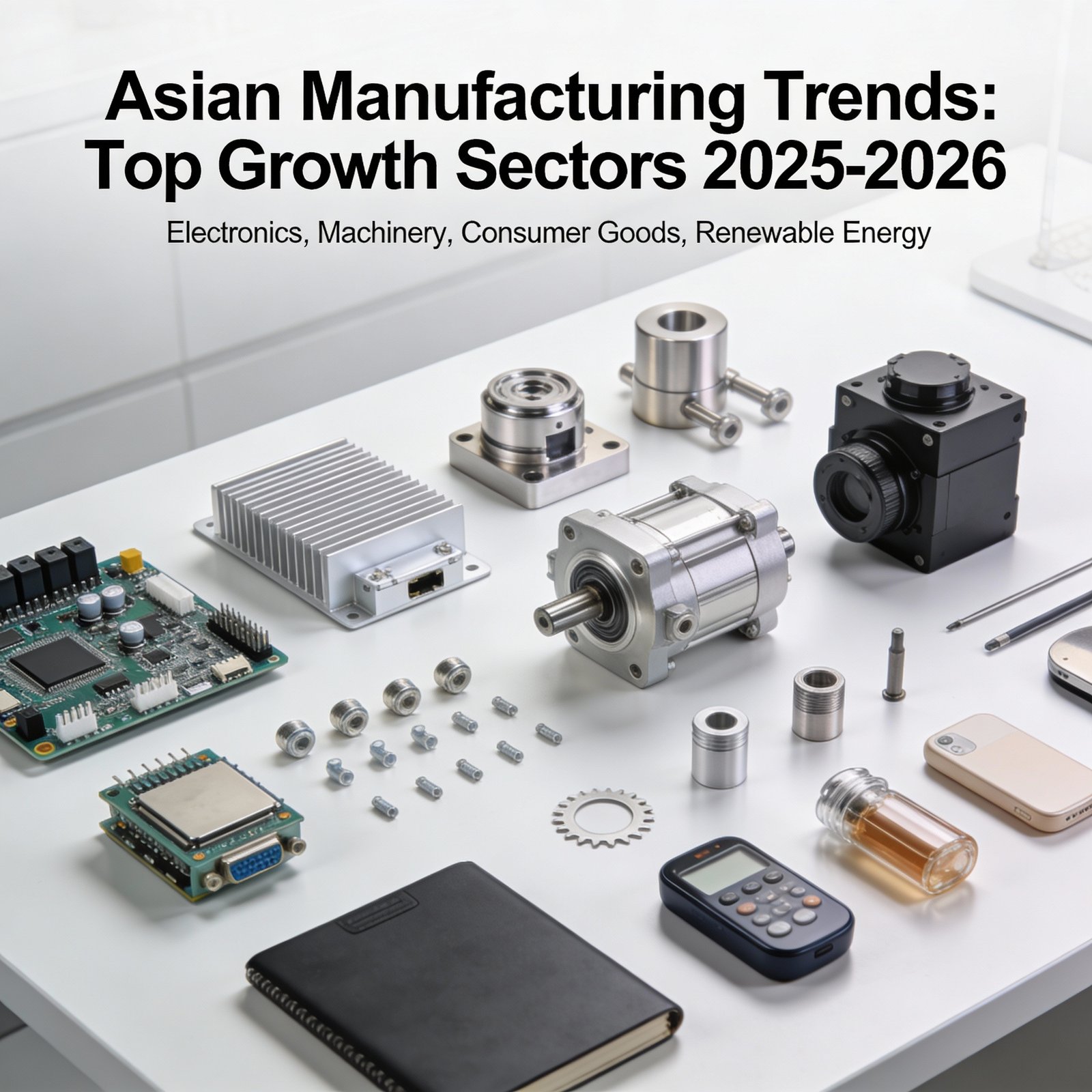
Asian Manufacturing and Trade: Key Developments and Growth Trends 2025-2026
The Asian manufacturing and trade landscape has witnessed remarkable transformations throughout 2025 and 2026, with significant developments across multiple sectors. From semiconductor innovations to renewable energy investments, the region continues to strengthen its position as a global manufacturing and trade hub.
Technology and Semiconductor Manufacturing Excellence
Taiwan maintains its dominance in the semiconductor industry, with TSMC’s ambitious expansion of 2nm chip manufacturing facilities in Hsinchu. This strategic move demonstrates Asia’s commitment to advancing technological capabilities and meeting global semiconductor demands. Similarly, Malaysia has emerged as a prominent electronics manufacturing hub, recording an impressive 25% growth in electronics exports during 2026, particularly in semiconductor and electronic components.
Sustainable Energy and Environmental Innovation
China’s renewable energy sector showcases remarkable progress with a 20% year-over-year increase in solar panel and wind turbine installations. This growth reflects the region’s dedication to sustainable manufacturing practices and green energy solutions. Key developments include:
- Expanded solar panel production capabilities
- Increased wind turbine manufacturing
- Enhanced renewable energy supply chain efficiency
- Reduced production costs through technological innovation
Healthcare and Pharmaceutical Manufacturing Growth
India’s pharmaceutical sector has achieved notable success, with exports rising by 15% in 2025. This growth underscores Asia’s crucial role in global healthcare supply chains and demonstrates the region’s manufacturing capabilities in producing high-quality generic medicines and vaccines. The sector’s expansion has been supported by:
- Advanced manufacturing facilities
- Robust quality control measures
- Increased production capacity
- Strong international partnerships
Supply Chain and Logistics Innovations
South Korea leads the way in supply chain modernization, implementing cutting-edge AI and blockchain technologies to enhance logistics efficiency. These innovations have revolutionized traditional supply chain management, offering:
- Improved transparency in shipping and logistics
- Reduced operational costs
- Enhanced delivery tracking capabilities
- Better inventory management systems
Traditional Manufacturing Sectors
Traditional manufacturing sectors continue to thrive, with Vietnam’s textile industry reporting a 30% increase in exports during 2025. Japan’s automotive sector has also shown remarkable resilience, achieving a 10% growth in exports, primarily driven by electric and hybrid vehicle demand.
Conclusion
The Asian manufacturing and trade landscape demonstrates remarkable resilience and innovation across various sectors. From high-tech semiconductor production to traditional textile manufacturing, the region continues to adapt and evolve, maintaining its position as a global manufacturing powerhouse. The integration of sustainable practices, technological advancement, and supply chain innovations suggests a promising future for Asian manufacturing and trade relations.