

Blog
Asia Manufacturing Trends 2026: Key Growth and Trade Insights

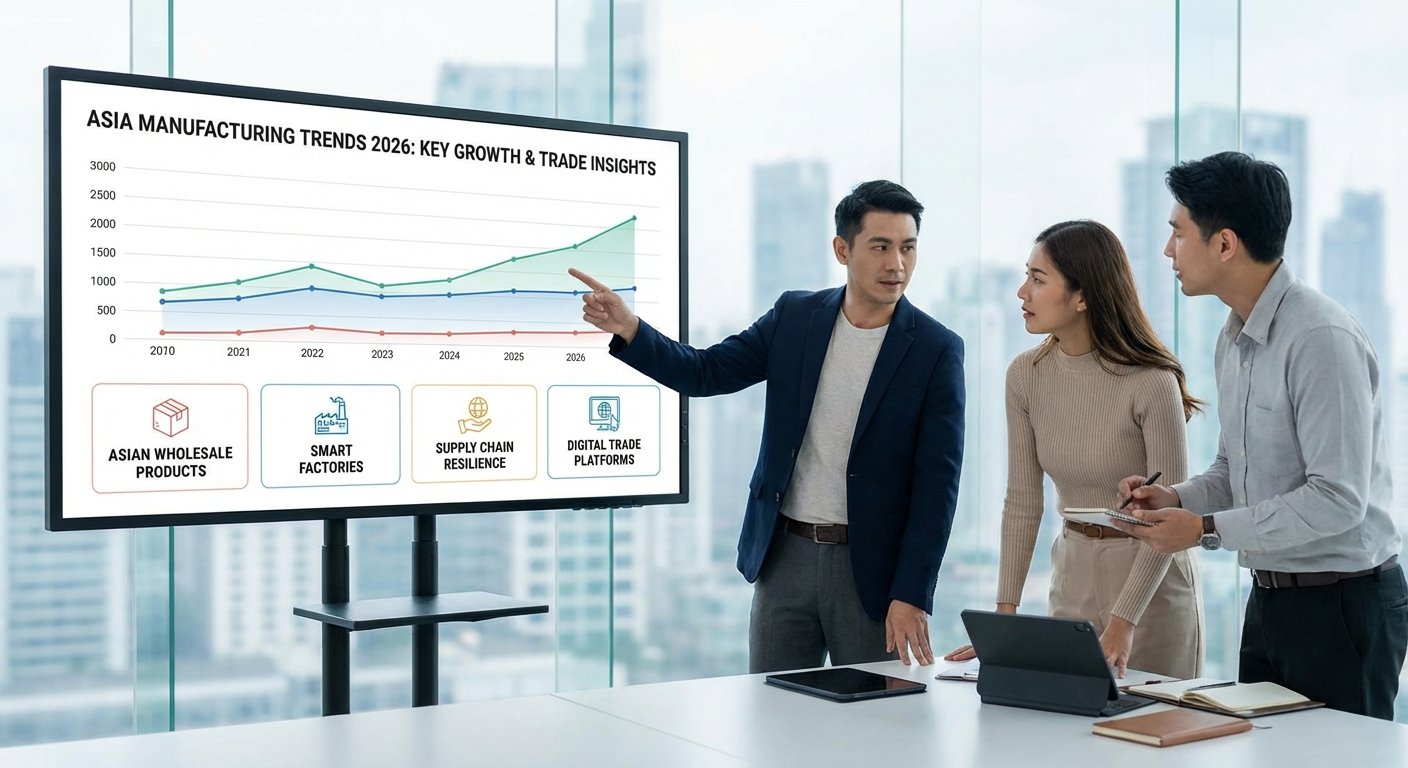
Asia’s Manufacturing and Trade Landscape: Key Developments and Trends in 2026
The Asian manufacturing and trade sector continues to demonstrate remarkable resilience and innovation, with significant developments shaping the region’s economic landscape. This comprehensive analysis examines the latest trends, innovations, and market dynamics driving Asia’s wholesale and manufacturing sectors.
Manufacturing Expansion and Technology Integration
The manufacturing sector in Asia is witnessing unprecedented growth and technological advancement. Foxconn’s $1.5 billion investment in expanding its Indian manufacturing facilities marks a significant shift in global electronics production. This strategic move aims to diversify the global supply chain and capitalize on India’s growing technical workforce.
In the automotive sector, Toyota’s new electric vehicle production facility in Tianjin represents a major step forward in Asia’s transition to sustainable manufacturing. The facility, scheduled to begin operations in Q3 2026, incorporates advanced automation and green manufacturing practices.
Trade Performance and Economic Indicators
Asian economies are showing robust growth in trade volumes and export performance. Key highlights include:
- China’s exports grew 8.2% year-on-year in early 2026
- India achieved record merchandise exports of $400 billion in FY 2025-26
- Vietnam’s GDP grew by 7.5% in 2025, driven by manufacturing excellence
- South Korea’s economy rebounded with 3.5% growth in 2025
Innovation and Product Development
Asian manufacturers continue to lead in product innovation and technological advancement. Samsung’s Galaxy Z Fold5 showcases the region’s capabilities in advanced electronics manufacturing, while Xiaomi’s Mi Solar Watch demonstrates a growing focus on sustainable consumer electronics.
The plant-based food sector has seen remarkable growth, with Chinese manufacturers reporting a 30% increase in demand for meat alternatives. This trend has sparked numerous local startups entering the market with innovative products.
Supply Chain and Logistics Evolution
Significant investments in logistics infrastructure are reshaping Asia’s supply chain capabilities. The Port of Shanghai’s $2 billion expansion project exemplifies the region’s commitment to enhancing trade efficiency. Additionally, the strategic partnership between SingPost and Cainiao Network is revolutionizing cross-border e-commerce delivery in Southeast Asia.
Digital transformation in trade processes is gaining momentum, as evidenced by India’s new online platform for streamlining export-import procedures, which has significantly reduced processing times and operational costs.
Conclusion
The Asian manufacturing and trade sector is experiencing a transformative period marked by technological innovation, sustainable practices, and robust growth. With continued investments in infrastructure, technology, and human capital, the region is well-positioned to maintain its leadership in global manufacturing and trade through 2026 and beyond.