

Blog
Asian Manufacturing Trends: 2026 Trade and Export Outlook

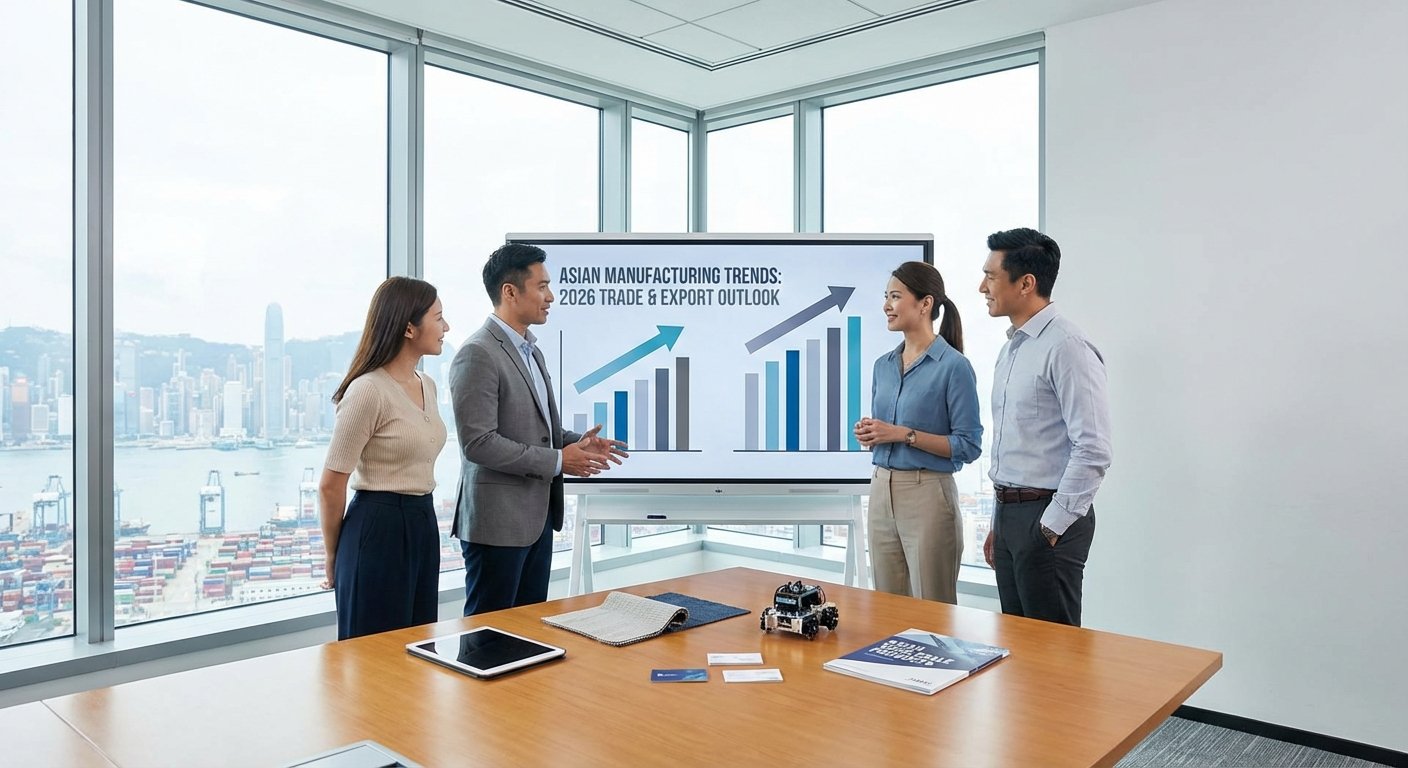
Asian Manufacturing and Trade Outlook: Key Developments Reshaping Global Commerce in 2026
The Asian manufacturing and trade landscape continues to demonstrate remarkable dynamism and resilience, with several major developments in early 2026 reshaping global commerce. From record-breaking export volumes to groundbreaking technological advances, Asia’s industrial powerhouses are setting new benchmarks in international trade and manufacturing excellence.
Record Export Growth and Market Expansion
China’s export sector has kicked off 2026 with exceptional momentum, recording a remarkable 15% year-over-year increase in global shipments. This growth is primarily driven by three key sectors: electronics, machinery, and textiles. The robust performance reflects both recovering global demand and China’s continued manufacturing competitiveness.
Meanwhile, Vietnam’s industrial landscape is transforming rapidly, with its newly established industrial park attracting over $500 million in foreign investment. The facility is projected to generate $2 billion in annual exports, significantly boosting Vietnam’s position in global supply chains, particularly in electronics and automotive components.
Technological Leadership and Innovation
Taiwan’s semiconductor industry has achieved a significant milestone with TSMC’s successful mass production of 2nm chips in early 2026. This technological breakthrough has attracted global technology leaders seeking to secure supply chains for next-generation devices, further cementing Taiwan’s position as a critical node in the global electronics supply chain.
In the robotics sector, Japan’s strategic expansion in Southeast Asia through Mitsubishi Electric’s new Thai facility represents a $100 million investment in advanced manufacturing capabilities. This development is poised to revolutionize industrial automation across the ASEAN region.
Trade Partnerships and Economic Integration
The signing of the comprehensive economic partnership between South Korea and Indonesia marks a significant step toward deeper regional integration. The agreement targets ambitious bilateral trade growth, with specific focuses on:
- Advanced manufacturing collaboration
- Technology transfer initiatives
- Supply chain optimization
- Reduced trade barriers
Economic Indicators and Market Conditions
India’s wholesale market presents a mixed picture, with a 4.2% rise in the wholesale price index throughout 2025. While fuel, metals, and food products have experienced cost increases, strong domestic supply chains have helped maintain overall market stability.
Conclusion
The Asian manufacturing and trade sector continues to demonstrate remarkable resilience and innovation in 2026. With significant investments in advanced manufacturing, strengthening regional partnerships, and technological breakthroughs, Asia’s role in global commerce is becoming increasingly central. Businesses looking to engage with Asian markets should focus on emerging opportunities in high-tech manufacturing, regional trade integration, and supply chain optimization to maximize their potential in this dynamic market environment.