

Blog
Asian Manufacturing Trends: Key Developments in 2026

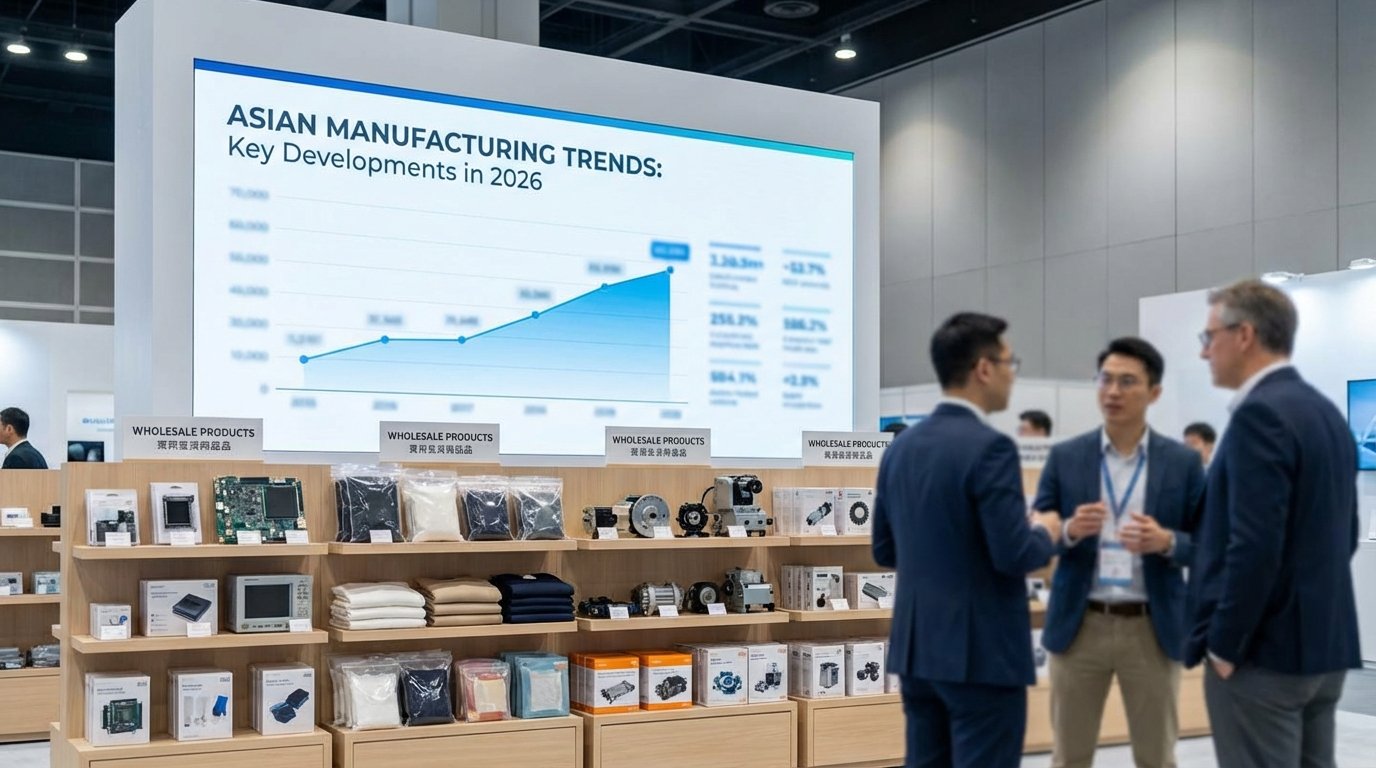
Asia’s Manufacturing and Trade Landscape: Key Developments and Trends in 2026
The Asian manufacturing and trade sectors have witnessed significant transformations throughout 2026, marked by technological innovations, sustainable initiatives, and strategic economic partnerships. This comprehensive analysis explores the latest developments shaping the region’s wholesale trade and manufacturing landscape.
Manufacturing Evolution and Regional Expansion
The manufacturing sector in Asia has undergone substantial changes, with major players strategically diversifying their production bases. Foxconn’s new manufacturing facility in Vietnam, opened in March 2026, represents a significant shift in regional manufacturing dynamics. This expansion aligns with the broader trend of companies seeking to establish more resilient supply chains.
In a notable development, Hyundai Motor Group’s $7 billion investment in Indonesian manufacturing facilities demonstrates the growing importance of Southeast Asia in the global automotive supply chain, particularly in electric vehicle production. These investments are reshaping the region’s manufacturing capabilities and creating new opportunities for wholesale traders.
Trade Relations and Economic Growth
The first half of 2026 has seen remarkable growth in intra-Asian trade, with China’s exports to ASEAN countries increasing by 15% to reach $350 billion. The Asian Development Bank’s projection of 6.5% growth for emerging Asian economies in 2026 reflects the region’s strong economic fundamentals.
- India’s exports to the United States grew by 20% in fiscal year 2025-26
- Japan’s economy expanded by 2.2% in Q1 2026
- New trade agreements between South Korea and Indonesia aim to boost bilateral trade
Innovation and Product Development
Asian manufacturers continue to lead in technological innovation, with several groundbreaking products launched in 2026. LG Electronics’ new transparent OLED displays represent a significant advancement in display technology, while Samsung’s latest smart home appliances showcase the region’s capabilities in IoT and AI integration.
The wholesale market has seen particular interest in sustainable products, with the plant-based food sector projected to grow by 25% annually. This trend reflects changing consumer preferences and increasing environmental awareness across the region.
Supply Chain and Digital Transformation
Digital transformation initiatives are revolutionizing Asian supply chains. Alibaba Group’s $1 billion investment in Southeast Asian logistics infrastructure demonstrates the growing importance of efficient distribution networks in the wholesale sector. Singapore’s new digital trade documentation platform exemplifies how technology is streamlining wholesale operations and reducing operational costs.
Conclusion
As we progress through 2026, Asia’s manufacturing and trade sectors continue to demonstrate remarkable resilience and innovation. The region’s focus on technological advancement, sustainable practices, and strategic partnerships positions it strongly for future growth. Wholesale traders and manufacturers must stay attuned to these developments to capitalize on emerging opportunities in this dynamic market landscape.
The combination of robust economic growth, technological innovation, and strengthening trade relationships suggests that Asia will maintain its position as a global manufacturing and trade powerhouse throughout 2026 and beyond.