

Blog
Asia Manufacturing Outlook 2026: Growth and Trade Trends

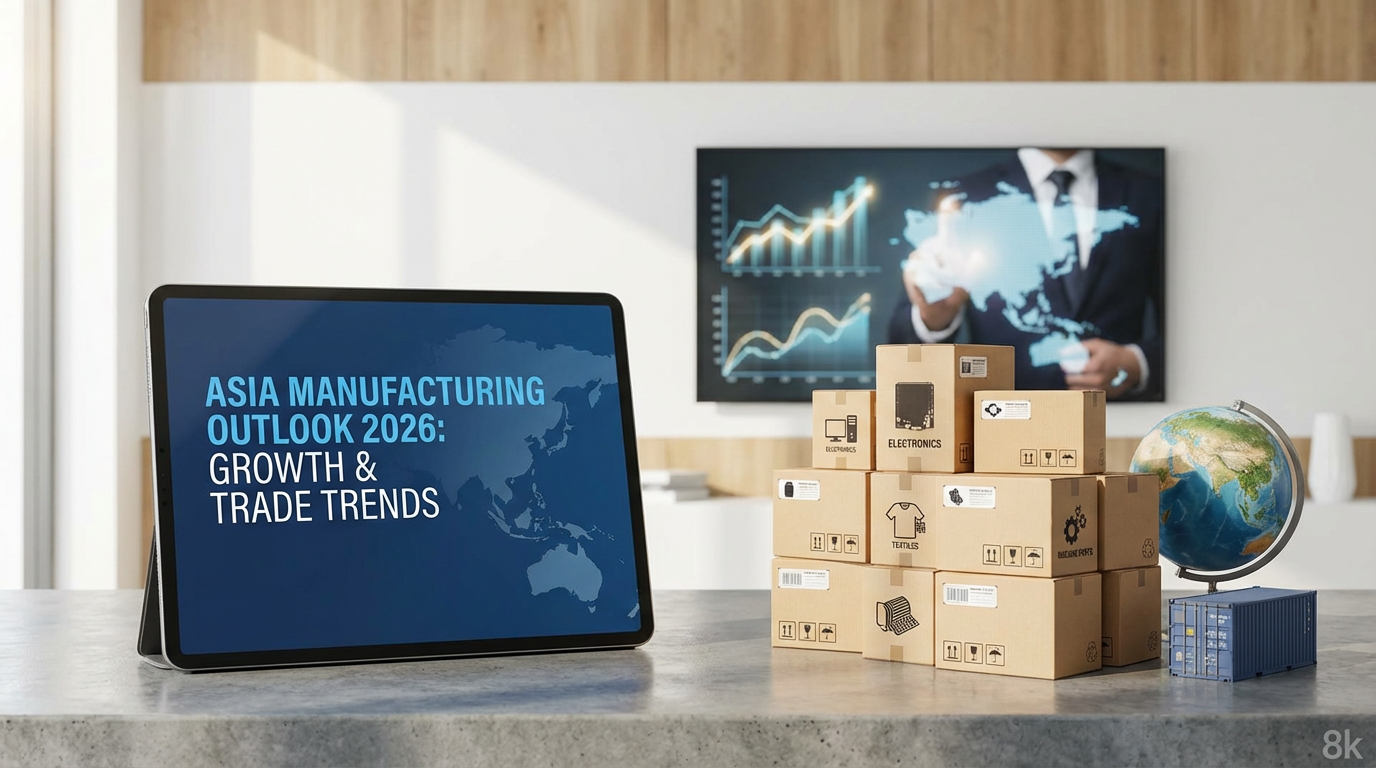
Asian Manufacturing and Trade Outlook 2026: Key Developments Reshaping the Region’s Economy
Asia’s manufacturing and trade sectors are experiencing remarkable growth and transformation, with significant developments across multiple industries shaping the region’s economic landscape. From electronics and automotive to logistics and trade agreements, here’s a comprehensive analysis of the most important trends and developments in Asian manufacturing and trade.
Manufacturing Excellence and Technology Leadership
Asian manufacturers are making bold moves to maintain their technological edge. Samsung Electronics is leading the charge with a massive $5 billion investment in its Xi’an semiconductor facility, significantly boosting NAND flash memory production capacity. This expansion reinforces Asia’s dominance in the global semiconductor supply chain.
In the automotive sector, Toyota has marked a major milestone with its new $3.2 billion EV battery plant in Thailand. The facility’s annual production capacity of 1.2 million vehicle batteries positions Southeast Asia as a crucial hub for the electric vehicle revolution.
Trade Growth and Export Performance
Recent trade figures demonstrate Asia’s robust economic recovery:
- Chinese exports reached $3.36 trillion, marking a 6.2% growth
- Trade with ASEAN nations increased by 9.8%
- Vietnamese clothing exports surged 20% in Q1 2026
- Electronics exports from India exceeded $20 billion
The implementation of the Regional Comprehensive Economic Partnership (RCEP) in early 2026 has created the world’s largest trading bloc, encompassing 30% of global GDP and promising to further accelerate regional trade integration.
Innovation and New Product Development
Asian companies continue to push technological boundaries. Chinese smartphone manufacturer Xiaomi is revolutionizing the affordable 5G segment with sub-$150 wholesale devices. Meanwhile, breakthrough innovations in artificial intelligence are emerging, exemplified by SenseTime’s advanced humanoid robot with sophisticated cognitive capabilities.
Supply Chain and Logistics Evolution
The region’s logistics infrastructure is undergoing significant modernization. Singapore’s ports achieved a record-breaking 40 million TEUs in container volume, while Alibaba’s Cainiao Network expanded its global reach with a strategic European fulfillment center. These developments enhance Asia’s position as a global trade hub and improve supply chain efficiency.
Economic Outlook and Future Prospects
The Asian Development Bank’s forecast of 5.5% GDP growth for ASEAN in 2026 reflects strong economic fundamentals. Key growth drivers include:
- Robust manufacturing sector performance
- Expanding regional trade integration
- Technological advancement in key industries
- Improved logistics infrastructure
- Stable inflation outlook at 3.7%
As Asia continues to strengthen its position in global trade and manufacturing, the region’s wholesale market presents compelling opportunities for international buyers and investors. The combination of technological innovation, infrastructure development, and trade facilitation creates a strong foundation for sustained growth in the years ahead.