

Blog
Asian Manufacturing Trends: Key Market Changes for 2026

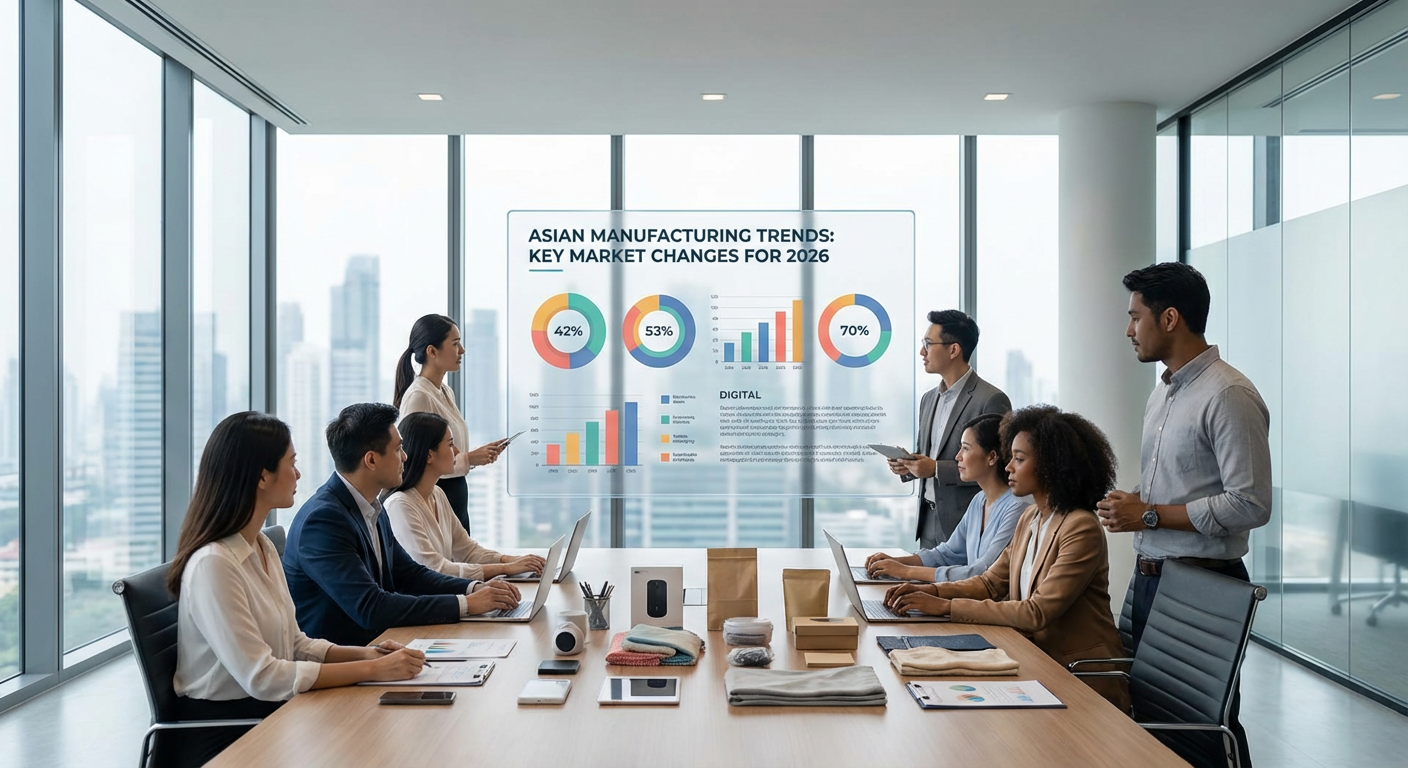
Asia’s Manufacturing and Trade Landscape: Key Developments Reshaping the Market in 2026
The Asian manufacturing and trade sector has witnessed remarkable transformation and growth through 2025-2026, with significant investments in new production facilities, record-breaking trade volumes, and innovative technological advancements. This comprehensive overview examines the latest developments shaping Asia’s industrial and trade landscape.
Manufacturing Expansion and New Production Hubs
Major manufacturers have made substantial investments across Asia, establishing new production facilities to meet growing global demand. Samsung Electronics has strengthened its semiconductor manufacturing capabilities with a $2 billion facility in Vietnam’s Bac Ninh province, focusing on advanced 3D V-NAND memory chips production. Similarly, Foxconn has committed $1.5 billion to a new iPhone assembly plant in Karnataka, India, marking a significant shift in global electronics manufacturing patterns.
The automotive sector has also seen notable expansion, with BYD inaugurating its third manufacturing facility in Changzhou, positioning China at the forefront of electric vehicle production. These developments highlight Asia’s growing importance as a global manufacturing hub.
Record-Breaking Trade Performance
Trade volumes across Asian markets have reached unprecedented levels, demonstrating the region’s economic resilience. Key highlights include:
- China’s foreign trade reaching $6.2 trillion, with exports growing 9% to $3.4 trillion
- India’s exports surpassing the $500 billion milestone
- Vietnam achieving 7.5% GDP growth, driven by robust export performance
Technological Innovation and Product Development
Asian manufacturers continue to lead in technological innovation, with several groundbreaking product launches. Xiaomi’s Mi Fold 3 represents significant advances in foldable smartphone technology, while Hyundai’s autonomous tractor introduction demonstrates Asia’s growing capabilities in agricultural technology and AI integration.
Strategic Business Partnerships
The retail and e-commerce sectors have witnessed strategic realignments through innovative partnerships. The collaboration between Japanese retailer Muji and JD.com exemplifies the growing integration of traditional retail with digital platforms. Additionally, the Reliance-Tata partnership in India showcases the evolution of omni-channel retail strategies in emerging markets.
Economic Outlook and Future Prospects
The Asian Development Bank’s projection of 5.2% growth for 2026 underscores the region’s positive economic trajectory. This growth is supported by China’s economic recovery and strong domestic demand across Asian markets, suggesting continued expansion in manufacturing and trade activities.
Conclusion
The developments of 2025-2026 demonstrate Asia’s strengthening position in global manufacturing and trade. With continued investments in advanced manufacturing facilities, technological innovation, and strategic business partnerships, the region is well-positioned for sustained growth and leadership in the global economy.