

Blog
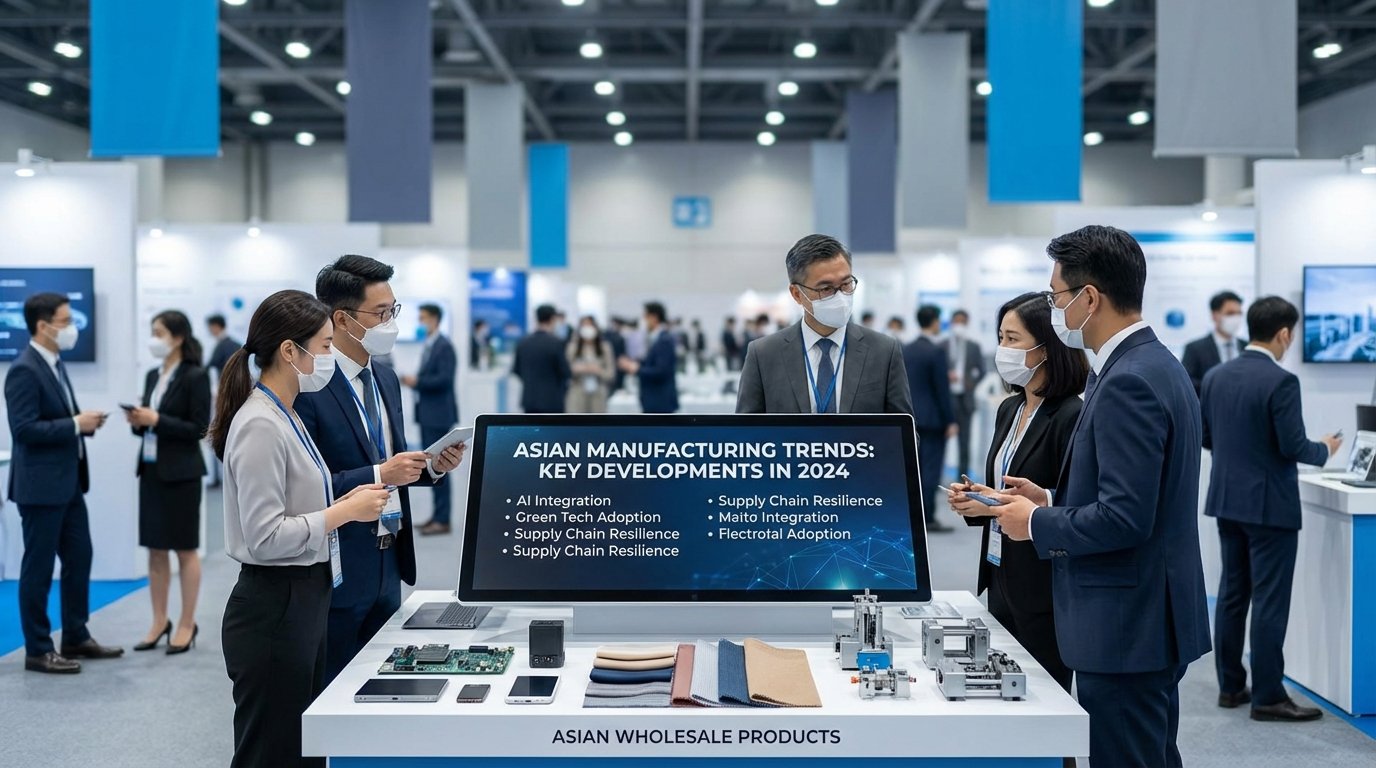
Asian Manufacturing Trends: Key Developments in 2024

Asia’s Manufacturing and Trade Landscape: Key Developments Shaping the Future
The Asian manufacturing and trade sector continues to demonstrate remarkable resilience and innovation, with several groundbreaking developments reshaping the business landscape. From semiconductor manufacturing to cross-border commerce, the region’s economic indicators point to sustained growth and technological advancement.
Manufacturing Excellence and Technological Innovation
Taiwan’s semiconductor industry maintains its global leadership position with TSMC’s ambitious expansion plans. The announcement of a new $10 billion chip fabrication plant in Japan marks a significant milestone in the region’s technological capabilities. This state-of-the-art facility, focused on 2nm chip production, demonstrates Asia’s commitment to advancing semiconductor technology.
In the consumer electronics sector, Samsung Electronics has reinforced its innovation leadership with the Galaxy Z Fold4. The improved hinge design and enlarged cover screen represent significant advances in foldable smartphone technology, highlighting Asian manufacturers’ capability to drive global tech trends.
Trade Volumes and Economic Growth
China’s trade performance remains robust, with total import and export values reaching an impressive $6.2 trillion, marking a 5.1% year-over-year increase. This growth reflects the nation’s resilient trade relationships and diverse export portfolio.
The broader Southeast Asian economy shows promising indicators, with the Asian Development Bank forecasting a 5.5% growth rate for 2026. Key factors contributing to this positive outlook include:
- Strong domestic demand across the region
- Recovering tourism sector
- Enhanced regional trade cooperation
- Increasing cross-border digital commerce
Supply Chain Innovation and Logistics Enhancement
Alibaba’s Cainiao network expansion represents a significant development in Asian logistics infrastructure. The planned construction of 10 new global fulfillment centers demonstrates the region’s commitment to strengthening cross-border e-commerce capabilities. This expansion will significantly enhance delivery efficiency and reduce shipping times for international trade.
Market Trends and Future Outlook
The smart home device market exemplifies Asia’s growing influence in consumer technology. With the region projected to account for 42% of global retail sales in this sector by 2026, manufacturers and wholesalers are positioning themselves to capitalize on this expanding market opportunity.
The implementation of the Regional Comprehensive Economic Partnership (RCEP) trade agreement has created unprecedented opportunities for cross-border trade. This historic agreement, encompassing 15 Asia-Pacific nations, establishes the world’s largest free trade bloc and promises to streamline regional commerce significantly.
Conclusion
Asia’s manufacturing and trade sectors continue to evolve rapidly, driven by technological innovation, infrastructure development, and strengthening regional cooperation. The combination of robust economic growth, advanced manufacturing capabilities, and improved logistics infrastructure positions the region for sustained leadership in global trade and commerce.