

Blog
Asia Manufacturing Outlook: Key Trade Trends for 2025-2026

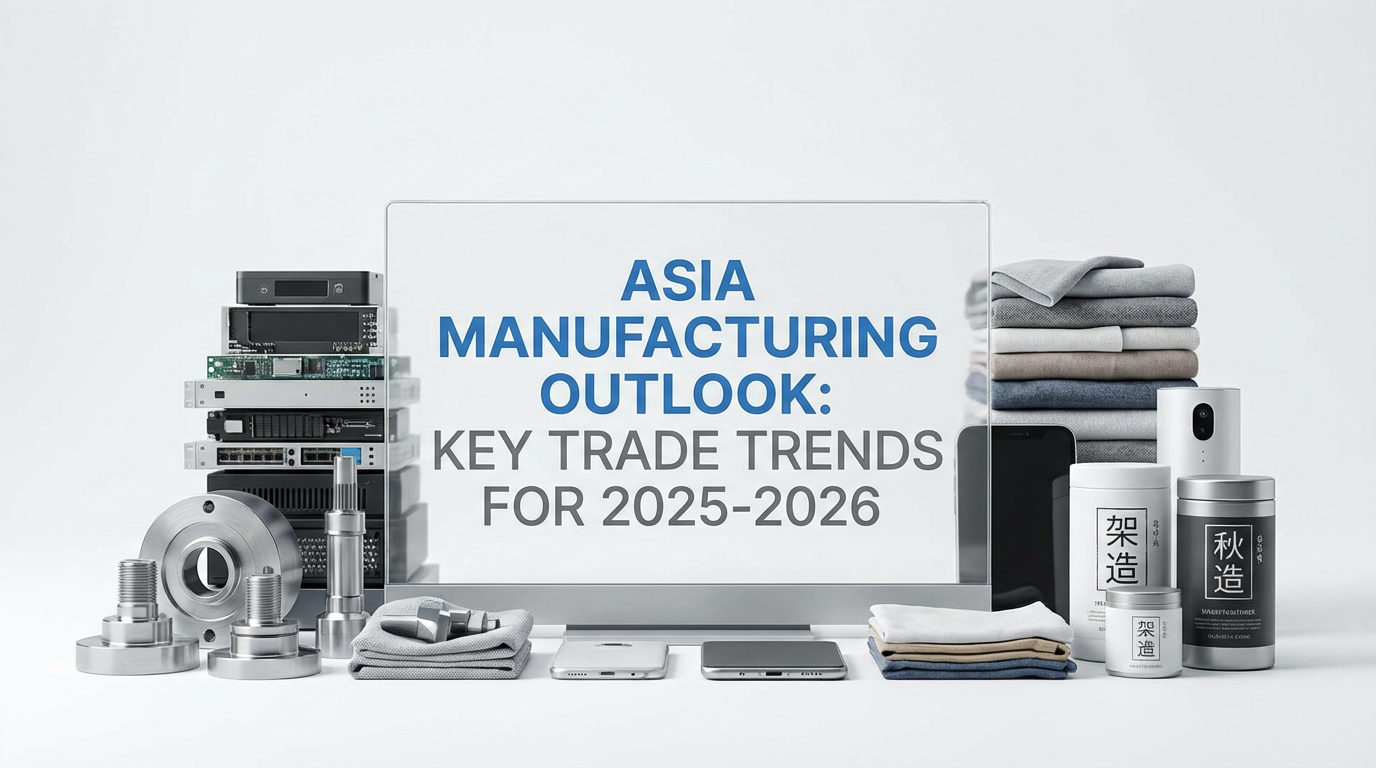
Asian Trade and Manufacturing Outlook 2025-2026: Key Developments Reshaping the Region
The Asian manufacturing and trade landscape is experiencing significant transformation, marked by technological advancement, sustainable initiatives, and robust economic growth. This comprehensive analysis examines the major developments and trends shaping Asian wholesale trade and manufacturing sectors through 2025-2026.
Manufacturing Evolution and Strategic Investments
The manufacturing sector across Asia is witnessing unprecedented growth and transformation. Samsung Electronics’ landmark $10 billion semiconductor fabrication plant investment in India represents a major shift in high-tech manufacturing capabilities across the region. This development is complemented by sustainable manufacturing initiatives, exemplified by PT Indah Jaya Textile Industry’s $50 million eco-friendly textile factory in Central Java.
Notable manufacturing innovations include:
- Advanced semiconductor production facilities
- Sustainable textile manufacturing operations
- Automated warehouse systems and robotics
- Green technology production facilities
Trade Growth and Economic Performance
Regional trade has reached historic highs, with ASEAN nations recording $5.2 trillion in trade volume, marking a remarkable 25% increase. Vietnam stands out with an impressive 8.2% GDP growth rate, leading Southeast Asian economies. The region’s economic vigor is further evidenced by India’s strong export performance to the European Union, achieving an 18% year-over-year growth and reaching $95 billion.
Innovation and Technology Integration
Asian manufacturers are increasingly focusing on innovative product development and technological integration. Taiwanese bicycle manufacturer Merida has pioneered eco-friendly electric bikes with enhanced battery performance, while Japanese firm Denso Wave has advanced warehouse automation with high-precision robots. Chinese manufacturer Huaxin Technologies is democratizing 5G technology with affordable smartphones targeted at Southeast Asian markets.
Supply Chain and E-commerce Evolution
The region’s supply chain infrastructure is undergoing significant modernization, with Singapore’s PSA International committing $1.5 billion to terminal automation and expansion. E-commerce growth has been exceptional, with ASEAN’s online retail sector reaching $172 billion, representing a 40% increase. The Alibaba-Flash Express partnership in Thailand exemplifies the growing integration of regional e-commerce and logistics networks.
Conclusion
The Asian manufacturing and trade sector is demonstrating remarkable resilience and innovation through 2025-2026. The combination of strategic investments, technological advancement, and robust trade growth positions Asia for continued economic leadership. Manufacturers and traders should closely monitor these developments to capitalize on emerging opportunities in this dynamic market landscape.