

Blog
Asian Manufacturing Boom: Key Trends and Trade Updates 2026

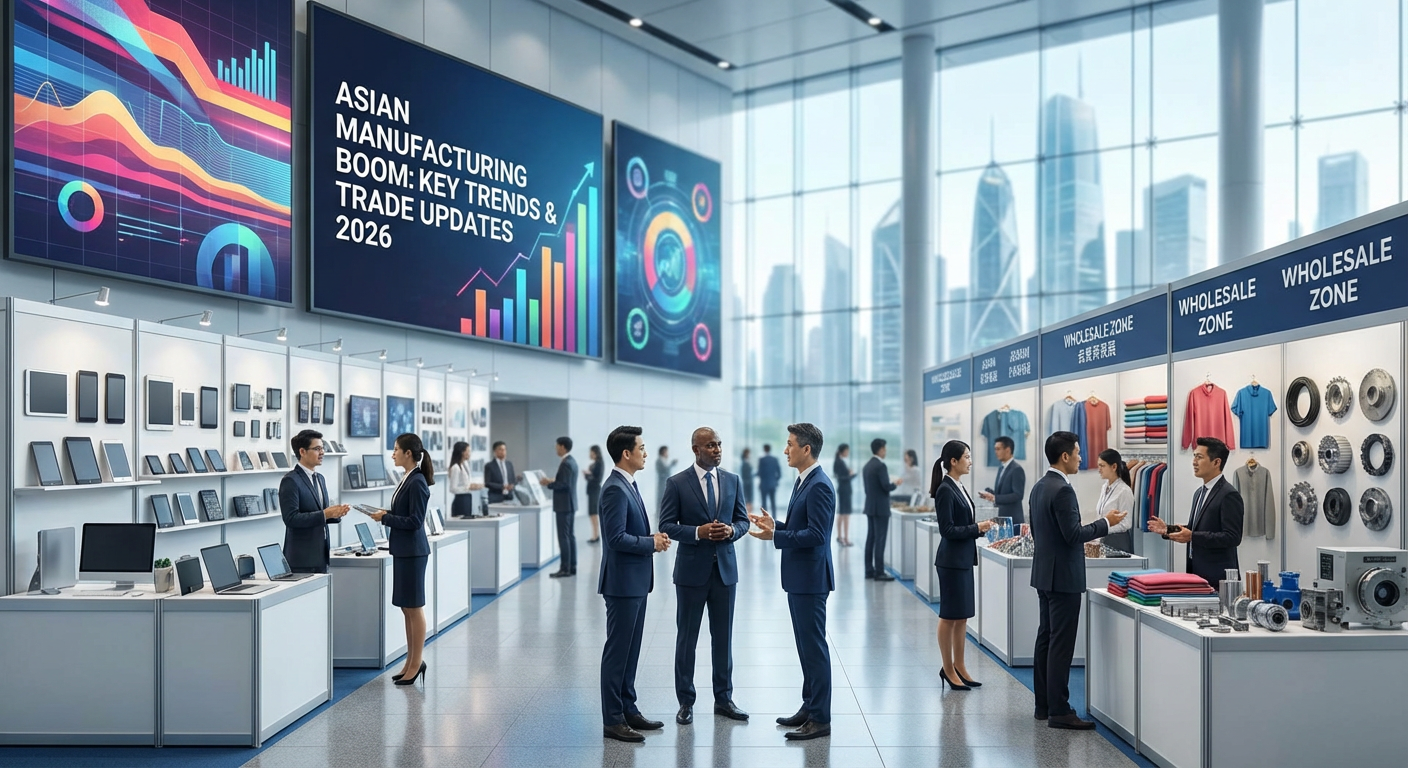
Asia’s Manufacturing and Trade Landscape: Latest Developments and Opportunities
The Asian manufacturing and trade sectors continue to demonstrate remarkable growth and innovation, with several significant developments shaping the region’s economic landscape. This comprehensive overview examines the latest trends, investments, and opportunities emerging across Asian markets, with a particular focus on wholesale trade and manufacturing developments.
Revolutionary Manufacturing Investments Reshape Regional Production
The manufacturing sector in Asia is witnessing unprecedented expansion, particularly in high-tech industries. A landmark development comes from South Korea’s automotive sector, with the announcement of a state-of-the-art EV battery plant in Indonesia. This facility, scheduled to commence operations in Q3 2026, will boast an impressive 30 GWh annual production capacity, positioning it as a cornerstone of Southeast Asia’s electric vehicle infrastructure.
In Vietnam, the semiconductor industry received a significant boost with a $2 billion investment from a Japanese conglomerate. This new fabrication plant represents a strategic move to address the global chip shortage while strengthening Asia’s position in the semiconductor supply chain.
Trade Volumes and Economic Performance
China’s trade performance continues to set new benchmarks, with total trade volume reaching an impressive $6.2 trillion in 2025. The standout figures include:
- 8.5% growth in exports
- 12.3% increase in imports
- Strengthened trade relationships with key global partners
India’s trading relationship with ASEAN has shown remarkable growth, with exports surging by 15% in fiscal year 2025-26. Key export categories driving this growth include:
- Petroleum products
- Gems and jewelry
- Industrial machinery
Digital Trade and Economic Cooperation
Singapore’s landmark digital trade agreement with the EU marks a significant step forward in international commerce. This partnership focuses on:
- Enhanced cross-border data flows
- Digital economy development
- Streamlined trade procedures
Supply Chain and Distribution Innovation
The logistics sector is evolving rapidly, with Malaysia emerging as a key regional hub following the establishment of a major distribution center by a global logistics leader. This strategic facility enhances regional supply chain efficiency and promises reduced delivery times across Southeast Asia.
Economic Outlook and Growth Projections
The Asian Development Bank’s latest forecast paints an optimistic picture for the region, projecting 5.8% growth for developing Asia in 2026, up from 5.3% in 2025. This positive outlook is supported by:
- Strong export performance
- Robust domestic consumption
- Continued infrastructure investments
Conclusion
The Asian manufacturing and trade sectors continue to demonstrate remarkable resilience and growth potential. With significant investments in advanced manufacturing facilities, strengthening trade relationships, and improved logistics infrastructure, the region is well-positioned for sustained economic growth. Businesses looking to engage with Asian markets should closely monitor these developments and consider strategic partnerships to leverage these emerging opportunities.