

Blog
Asian Manufacturing Trends: Key Trade Developments for 2026

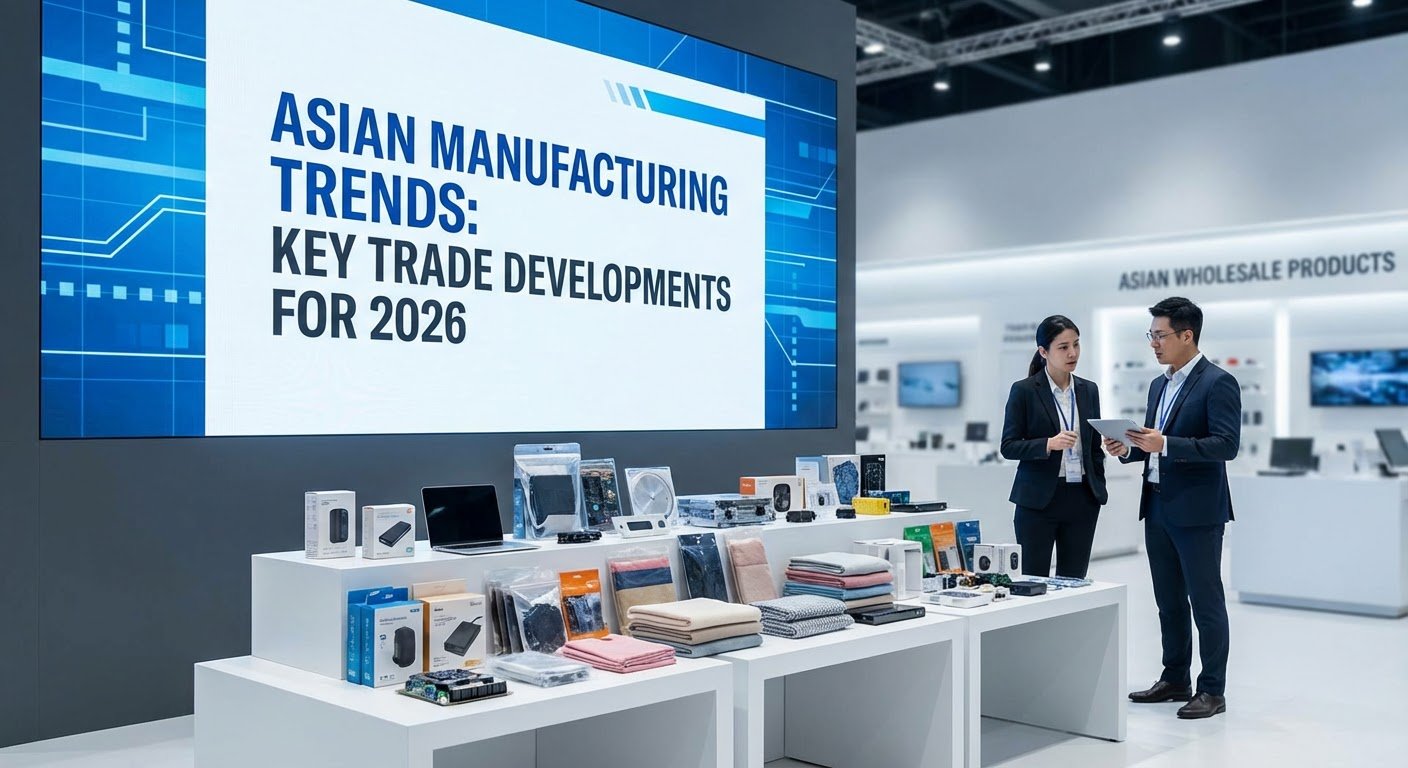
Asia’s Manufacturing and Trade Landscape: Key Developments Reshaping Global Commerce in 2026
The Asian manufacturing and trade sector continues to demonstrate remarkable resilience and innovation in 2026, with several groundbreaking developments reshaping the global business landscape. From revolutionary technological advances to expanding trade partnerships, this comprehensive overview examines the most significant trends and changes in Asian commerce.
Manufacturing Innovation and Technological Breakthroughs
Taiwan Semiconductor Manufacturing Company (TSMC) has marked a significant milestone with the introduction of its groundbreaking 2nm process technology for semiconductor manufacturing. This advancement represents a quantum leap in chip manufacturing capabilities, promising enhanced performance for AI applications, high-performance computing, and mobile devices.
In the energy sector, LG Energy Solution’s launch of advanced pouch-type batteries with 30% higher energy density is revolutionizing the electric vehicle market. This innovation directly addresses one of the most pressing challenges in EV adoption – driving range limitations.
Major Infrastructure and Production Investments
Several landmark manufacturing facilities are transforming the industrial landscape:
- Samsung Electronics’ $17 billion chip fabrication plant in Taylor, Texas – the company’s largest facility outside South Korea
- Reliance Industries’ $10 billion renewable energy complex in Gujarat, focusing on solar panels, batteries, and green hydrogen production
- Maersk’s $3.6 billion investment in mega-ship container vessels and Southeast Asian port terminals
Trade Relations and Economic Partnerships
The Asian trade environment is experiencing significant evolution through new partnerships and agreements. The U.S.-Taiwan trade pact represents a strategic shift in regional commerce, while the Japan-Australia critical minerals partnership demonstrates a growing focus on supply chain security and diversification.
Notable trade metrics include:
- China-ASEAN trade reaching $1.2 trillion in 2025
- RCEP agreement driving 30% trade growth among member nations
- ASEAN+3 region projected to grow by 5.2% in 2026
Consumer Technology and Product Innovation
Asian manufacturers continue to lead in consumer technology innovation. Xiaomi’s introduction of affordable 5G smartphones under $150 demonstrates the industry’s commitment to democratizing advanced technology. Meanwhile, Toyota’s wholesale distribution of hydrogen fuel cell modules marks a significant step toward sustainable transportation solutions.
Conclusion
The Asian manufacturing and trade sector is demonstrating remarkable dynamism in 2026, characterized by technological innovation, strategic investments, and strengthening international partnerships. These developments are not only reshaping regional commerce but are also having profound implications for global supply chains and economic relationships. As Asian economies continue to evolve and adapt, they remain central to worldwide industrial and commercial progress.