

Blog
Asian Manufacturing Trends: Key Trade Developments in 2024

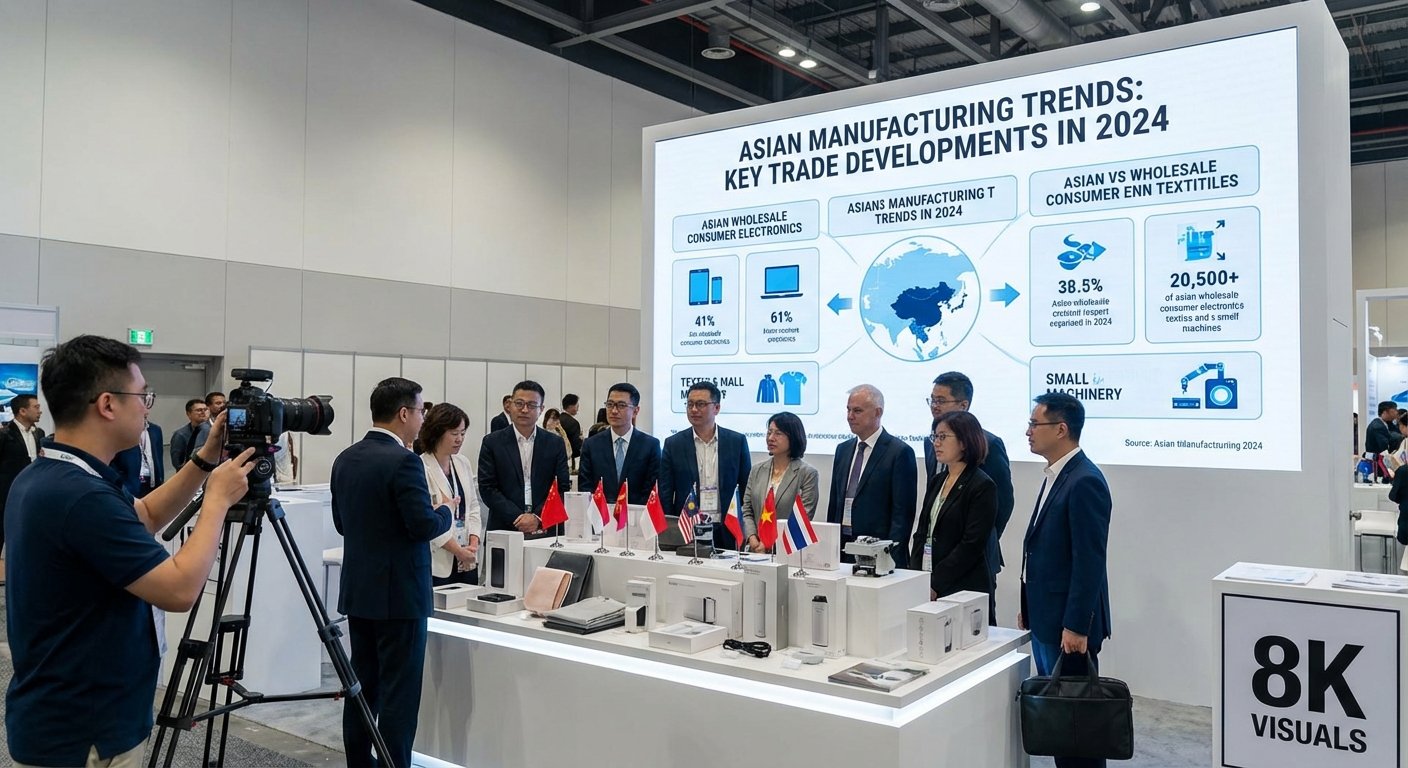
Asian Manufacturing and Trade Outlook: Key Developments Reshaping the Region’s Economic Landscape
Asia’s manufacturing and trade landscape continues to evolve rapidly, with significant developments in technology, supply chains, and economic partnerships reshaping the region’s business environment. This comprehensive analysis examines the latest trends and innovations driving Asia’s wholesale trade and manufacturing sectors.
Technology and Innovation Leadership
Asian manufacturers are maintaining their competitive edge through continued technological innovation. TSMC’s breakthrough in 2nm chip production demonstrates the region’s semiconductor leadership, supported by a massive $100 billion capacity expansion investment. In the consumer electronics sector, Samsung’s Galaxy Z Fold5 showcases Asian dominance in smartphone innovation with its advanced hinge design.
Chinese electric vehicle manufacturer BYD has emerged as a formidable player in the global EV market, with its Seal sedan achieving remarkable sales success. The 700km range capability positions Asian manufacturers at the forefront of electric vehicle technology.
Manufacturing Shifts and Supply Chain Diversification
A significant transformation is underway in Asian manufacturing networks, characterized by strategic diversification. Notable developments include:
- Foxconn’s $270 million investment in Vietnam for Apple product manufacturing
- LG Chem’s $3 billion cathode plant expansion into the US market
- Accelerated adoption of “China+1” strategies by global manufacturers
- Enhanced regional integration through the RCEP trade agreement
Trade Performance and Economic Growth
The region’s trade performance remains robust, with China reporting exports of $3.36 trillion and a 6.2% year-over-year growth. The Asian Development Bank’s forecast of 4.8% GDP growth for developing Asia signals continued economic strength, particularly in China and India.
The implementation of RCEP marks a significant milestone in regional trade integration, promising to eliminate 90% of tariffs and create new opportunities for wholesale trade across the Asia-Pacific region.
Strategic Business Developments
Major corporate moves are reshaping Asia’s business landscape. The DBS Group’s $7.3 billion acquisition of Bank Danamon represents significant financial sector consolidation, while Nippon Express’s $3 billion purchase of LF Logistics creates a logistics powerhouse capable of supporting growing regional trade volumes.
Conclusion
Asia’s manufacturing and trade sectors are demonstrating remarkable resilience and adaptability. The region’s commitment to technological innovation, strategic supply chain diversification, and economic integration positions it for continued growth. For wholesale buyers and manufacturing partners, these developments present both challenges and opportunities in navigating Asia’s evolving business landscape.
As supply chains continue to reorganize and new manufacturing hubs emerge, staying informed about these shifts will be crucial for businesses engaged in Asian wholesale trade and manufacturing partnerships.